
Blog
Motorhome beds and layouts explained
By Wayne Kavanagh Posted: 14/08/23 (Last updated 11 months ago)
Contents
If you’re not overly keen on the layout of your sleeping arrangements at home, more often than not it’s often possible to switch them up. You probably have the room to move this bedside table over there, move that wardrobe here, move this ottoman round there, and change the orientation or position of your bed. Voila – a new vibe. In a motorhome, however, it’s a little bit different – and that’s why, from the off, it’s very important to get a layout you can work with. Or, rather, leisure with.
In the ‘early days’ of the motorhome industry a decent bed was, while not a secondary concern, certainly not the highest item on the manufacturer’s agenda. At the design stage, layouts tended to favour the need for a flexible use of space more than comfort and convenience. So sleeping arrangements could often be something of a compromise when it came to the build stage. As the industry has grown, more and more sophisticated solutions and techniques have been developed for dealing with the problems inherent in maximising smaller living spaces. As a consequence, the types of bed available has increased. Here’s our overview of the types of bed available in motorhomes, plus our current picks of (new or used) motorhomes which contain them.
In this edition of our blog we’ll discuss the various types of beds and motorhome layouts available, and how they influence your use of the space.
Motorhome seating areas used during the day (whether in the lounge area or a second dinette) are converted into a bed (or beds) when required. The pillows and bedding can be removed (and stored) once you are up and about for the day – which means the motorhome needs to have reasonable storage options. In the early days of motorhoming this convertible type of bed was not necessarily that comfortable, though as design and construction techniques and materials have vastly improved over the years, you will be able to get a decent night’s sleep!
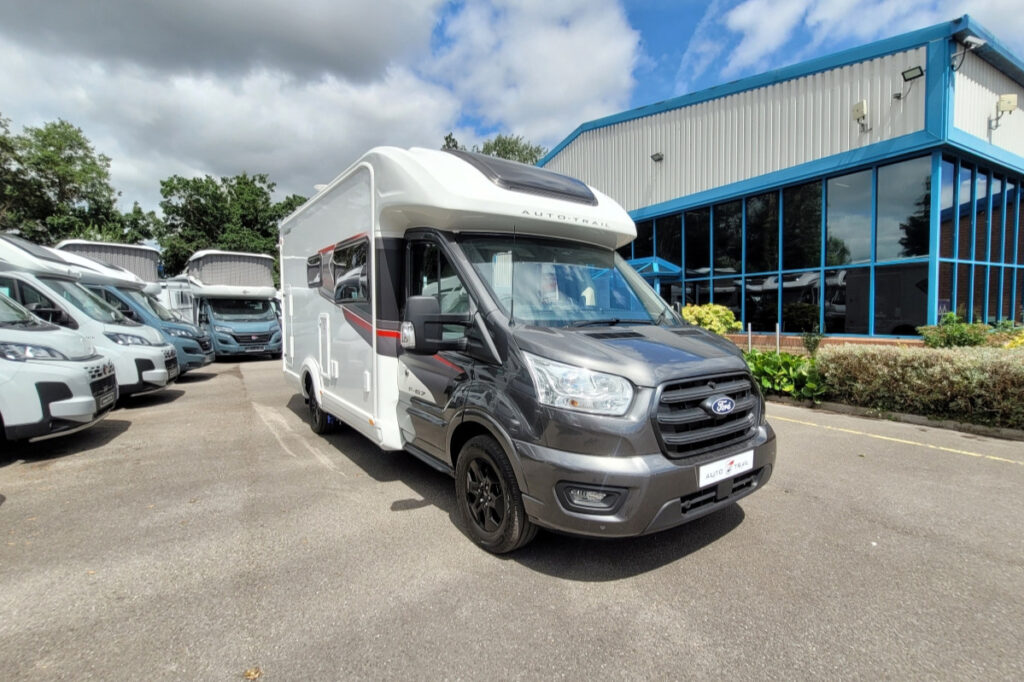
Our Pick: Auto Trail F62 Super Lo Line
This type of bed – which disappears in the ceiling space during the day – is a relatively recent innovation in motorhoming, and is what we could call a ‘game changer’. Like the club lounge set-up, the drop down is a feature of a dual purpose bedroom and living area – though because the bed itself can be ‘moved out of the way’ and doesn’t have to be converted from the seating and made up each night, it offers the maximum convenience.
Our Pick: Burstner Elegance I 910 G
As the name suggests, this type of bed is in the space directly above the driving cab of a motorhome. It’s a highly convenient option, as you do not have to assemble the bed and all of the bedding each night – it can be left ‘as is’ ready for the next time you want to go to sleep. During the day this area can also be used to store the bedding from the other (non-fixed) beds if required.
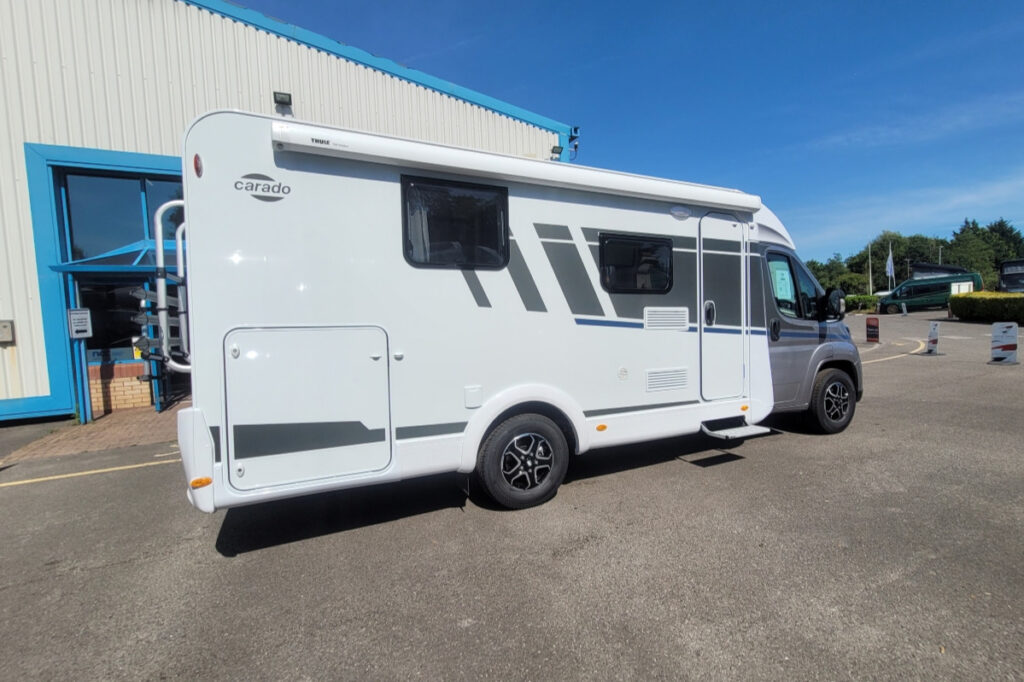
Our Pick: Carado A 461
Permanently installed beds are a motorhome feature consisting of a ‘proper’ mattress and sturdy bed base, affixed to the floor of your motorhome. In some motorhomes there may be two single beds, and this is called ‘twin singles’. They offer plenty of space as they are positioned down the sides of the motorhome, and they can often be turned in to a double bed through the use of an extra ‘piece’ in the space between. There is usually plenty of storage beneath the two singles in a twin bed motorhome.
Our Pick: Laika Kosmo 209
When a motorhome contains a fixed bed (usually at the rear of the vehicle or at the rear but just in front of a washroom) with space to move around it, this is referred to as an island bed. These are now commonplace in larger motorhomes, though are sometimes still a feature of mid-range and some smaller motorhomes too. An island bed motorhome can have the bed in a transverse orientation (ie. across the width of the vehicle rather than down the length of it).
Our Pick: Carthago Chic E-Line I 64 XL QB
This type of fixed bed is much less common than island beds, though there are some initial similarities. A French bed which is a double which is installed lengthways against the one side of the motorhome and is accessed from one of the bottom corners. French beds will often have a washroom or a wardrobe positioned next to them along most of the interior side.
Our Pick: Swift Voyager 564
Usually sited at the rear of a motorhome across its width (or, in some layouts, positioned down one side), bunk beds are two ‘stacked’ permanent single beds. This smart idea offers a hugely convenient option for families. Using a vertical axis rather than horizontal means the design works towards maximising your space.
Our Pick: Carado A 461
This is actually fairly difficult to answer as each of us will have different requirements as well as different ideas of what is ‘a good use of space’. It depends on whether you require a great deal of space in a bedroom area, or across the whole vehicle. Our two suggestions to address that:
Fixed island bed: Some may prefer the idea of a fixed island bed at the rear of the vehicle as it is, in almost all instances, possible to shut this area off from the rest of the motorhome, which gives a ‘proper bedroom’ vibe with its own sense of space. The downside of this, though, is that the bed and bedroom area will probably be the dominant feature of the motorhome and so the remaining area has to work hard to fit the other necessary things in, and also offer that sense of space across the rest of the vehicle.
Drop Down bed: In some ways this is the smartest option to go for, as a drop down bed completely tucks out of the way when not in use, and means the rest of the motorhome is not compromised (in terms of space). It also has the advantage over convertible seating as there is very little ‘faff’ to get set-up for your night’s sleep – just the flick of a switch and a short climb.
There are now so many different types of bed in motorhomes that you will be able to find something comfortable and convenient to suit your needs, pretty much whatever they are. If you are part of a couple and like weekends away, then a smaller vehicle with a drop down or an overcab may do the trick for you, whereas a family with a couple of kids may benefit from the bunk beds layout. When you’re choosing a motorhome you should carefully consider the type and arrangement of the beds, and how each individual motorhome will feel because of the layout when you live in it. At Chelston we’re happy to talk you through the various options available.