Blog
How to get the best out of your motorhome wi-fi
By Wayne Kavanagh Posted: 10/03/25 (Last updated 1 year ago)
Contents
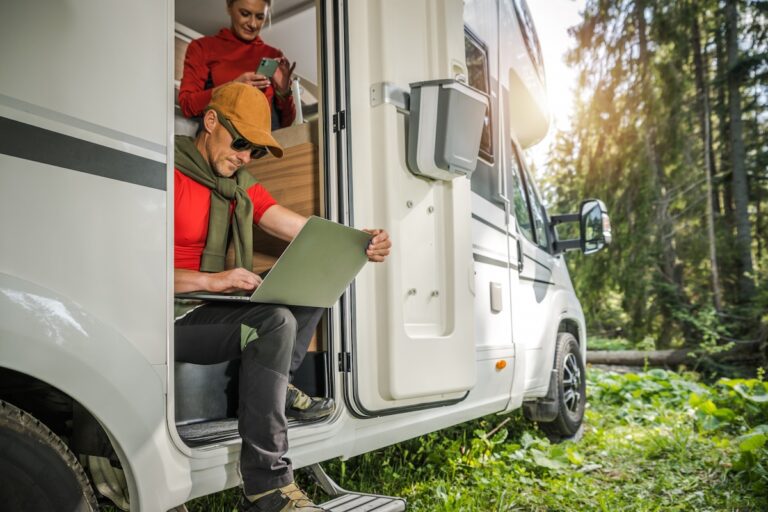
We’re now firmly in the ‘digital age’. During the last twenty-five years or so, the internet has completely revolutionised the way we live. Increasingly, it’s become less about just social messaging your mates with jokes and banter, or sharing photos with family, and more about the practicalities of the things we do each day. For motorhome enthusiasts this means things like navigation, streaming entertainment, having the capacity to work remotely or keeping in contact with home.
Today, just about everything has gone ‘wireless’ too – no need for cables to connect! Reliable access to the internet really enhances the overall travel experience and so, in this edition of our blog, we delve into the intricacies of Wi-Fi. We explore mobile Wi-Fi solutions, and offers insights into optimising connectivity while you’re out on the road in the motorhome you just bought from Chelston!
What is wi-fi and how does it work?
Wi-Fi (short for Wireless Fidelity) is a technology enabling electronic devices to connect to the internet, or to communicate wirelessly with each other within a particular area. Wi-Fi operates using radio waves (for the technical amongst you, typically in the 2.4 GHz and 5 GHz frequency bands) to transmit data between a router and Wi-Fi-enabled devices such as smartphones, tablets and laptops.
A standard Wi-Fi setup involves:
- Internet Service Provider (ISP): Supplies the internet connection to your premises.
- Modem: Converts the ISP’s signal into digital data.
- Router: Distributes the internet connection wirelessly to devices within its range.
When a device connects to Wi-Fi, it communicates with the router, which in turn connects to the modem to access the internet. This wireless communication eliminates the need for physical cables, offering flexibility and convenience.
Mobile wi-fi
Many modern motorhomes have pre-fitted Wi-Fi capability, so the first thing you should do is check whether yours does. If you don’t, then mobile Wi-Fi (sometimes referred to as Mi-Fi) provides internet access when you’re on the go by utilising cellular networks. This is particularly beneficial for motorhome users who travel to areas without fixed broadband.
- Smartphone tethering: Modern mobile phones are ‘smart’ and can act as personal hotspots, sharing their mobile data connection with other devices. This method is convenient but may drain the phone’s battery quickly and is dependent on the mobile data plan’s allowances.
- Dedicated mobile hotspots: Portable devices designed solely to provide internet access by connecting to cellular networks. These devices often support multiple connections simultaneously, and they should offer better battery life compared to smartphone tethering.
- USB dongles: Small devices that plug into a laptop’s USB port, allowing direct internet access via cellular networks. While straightforward, they typically support only one device at a time.
The performance of mobile Wi-Fi depends on factors such as cellular network coverage, the limits of your data plan(s), and the capabilities of the mobile hotspot device itself.
Wi-fi in motorhomes (and other leisure vehicles)
Achieving reliable Wi-Fi when you’re out and about in your motorhome presents unique challenges. Things like location, signal obstructions and the mobile nature of your lifestyle can all affect connectivity. However, there are several strategies you can follow which will enhance it.
1. Your needs
Work out what the primary purpose of your internet usage is.
- Light: Things like checking emails or browsing social media actually only require minimal bandwidth.
- Moderate: Streaming music or SD (standard definition) videos necessitates a stable connection with moderate data usage.
- Heavy: Streaming of HD (high definition) video, online gaming or remote work with large file transfers are all things that demand high-speed connections and substantial data usage.
Understanding your needs will guide you in selecting appropriate equipment and data plans.
2. The right mobile network provider
Network coverage varies by region. In the UK, the major providers include EE, Vodafone, O2, and Three with each of them having different strengths depending on location. Consider investing in a SIM card from a provider with extensive coverage or opting for a device that supports multiple networks.
3. Quality equipment
- 4G/5G routers: These are devices used to connect to cellular networks and distribute your internet connection via Wi-Fi within the motorhome. Advanced models support both 4G and 5G networks.
- External antennas: Enhancing signal reception is crucial, particularly in areas which suffer from weak coverage. External antennas can be mounted on the vehicle to improve signal strength and stability.
- Signal boosters: These amplify weak signals, and provide you with a more reliable connection inside your motorhome.
4. Wi-Fi Boosters
When you’re staying at campsites or caravan parks that offer Wi-Fi, the signal might not always reach your vehicle effectively, which will affect your connectivity. Wi-Fi boosters or extenders can amplify existing signals, extending coverage and improving quality.
5. Satellite internet
For those motorhomers who travel frequently to remote areas which have very little mobile coverage, satellite internet offers an alternative. Though it’s traditionally expensive and slower, advancements like low Earth orbit (LEO) satellites and satellite systems have improved performance and affordability. However, factors such as the cost of initial set-up, ongoing subscription fees and potential latency should be carefully considered.
6. Data usage
Data can be consumed rapidly, especially with activities like streaming or video conferencing. There are ways to manage data effectively.
- Monitor usage: Check your data consumption on a regular basis to avoid exceeding your allowances.
- Offline options: Download content like maps, music or videos when you’re connected to unlimited Wi-Fi and access them later (ie. without ‘using your mobile data).
- Streaming quality: Lowering video quality can significantly reduce data usage without severely impacting viewing experience.
7. Technological advancements
Mobile internet is an area of technology that’s continually evolving. Staying in the loop about new tech, network upgrades and emerging solutions is an important way to help you adapt and maintain optimal connectivity. For instance, the advent of Wi-Fi 7 will bring faster connectivity speeds and improved efficiency, both of which could benefit mobile users in the future.
8. Secure connection
Security is important when accessing the internet on the move.
- Strong passwords: Make sure your mobile hotspot or router is protected with a robust password to prevent unauthorised access.
- Network encryption: Utilise WPA3 encryption for enhanced security.
- Consider a VPN: A Virtual Private Network (VPN) adds extra security, especially when accessing sensitive information over public networks.
9. International travel
If your motorhome travels take you beyond the UK, be mindful of things like roaming charges on your mobile bill, and general network compatibility. To counter the issues, some mobile network providers offer international data plans (while others may incur significant fees). Research local SIM card options or global roaming solutions to stay connected without breaking your bank with excessive costs!
10. Community
Joining motorhome forums and online communities always provides valuable insights and recommendations based on actual experiences. Your fellow motorhome travellers often share tips on the best gear, data plans and strategies for staying connected while you’re out there on the road.
Ensuring reliable Wi-Fi in your motorhome (or other leisure vehicle) involves a combination of things. Understanding your internet needs, selecting the appropriate equipment, choosing the right service providers and putting strategies in place to enhance signal and security, are all very important. By staying on top of these things you’ll be able to enjoy your online experience while you’re on your travels. Check in at Chelston to see the new and used motorhomes currently available, and discuss your Wi-Fi needs with our team of experts. They’ll be happy to point you in the direction of vehicles that suit!